


Consultation
Your story, your reports, an examination.
The first visit is for listening and examining. Bring every report you have, and a family member if you can.
- History
- Examination
- Reports reviewed
Cancer Doctor & Surgeon · Bikaner
डॉ. देवी सिंह कच्छावा
Consultant Surgical Oncologist · Assistant Professor (Surgery)
Acharya Tulsi Regional Cancer Treatment & Research Institute, PBM Hospital, Bikaner
Dr. Devi Singh Kchhawa
डॉ. देवी सिंह कच्छावा
Acharya Tulsi Regional Cancer Treatment & Research Institute, PBM Hospital, Bikaner
01The surgeon
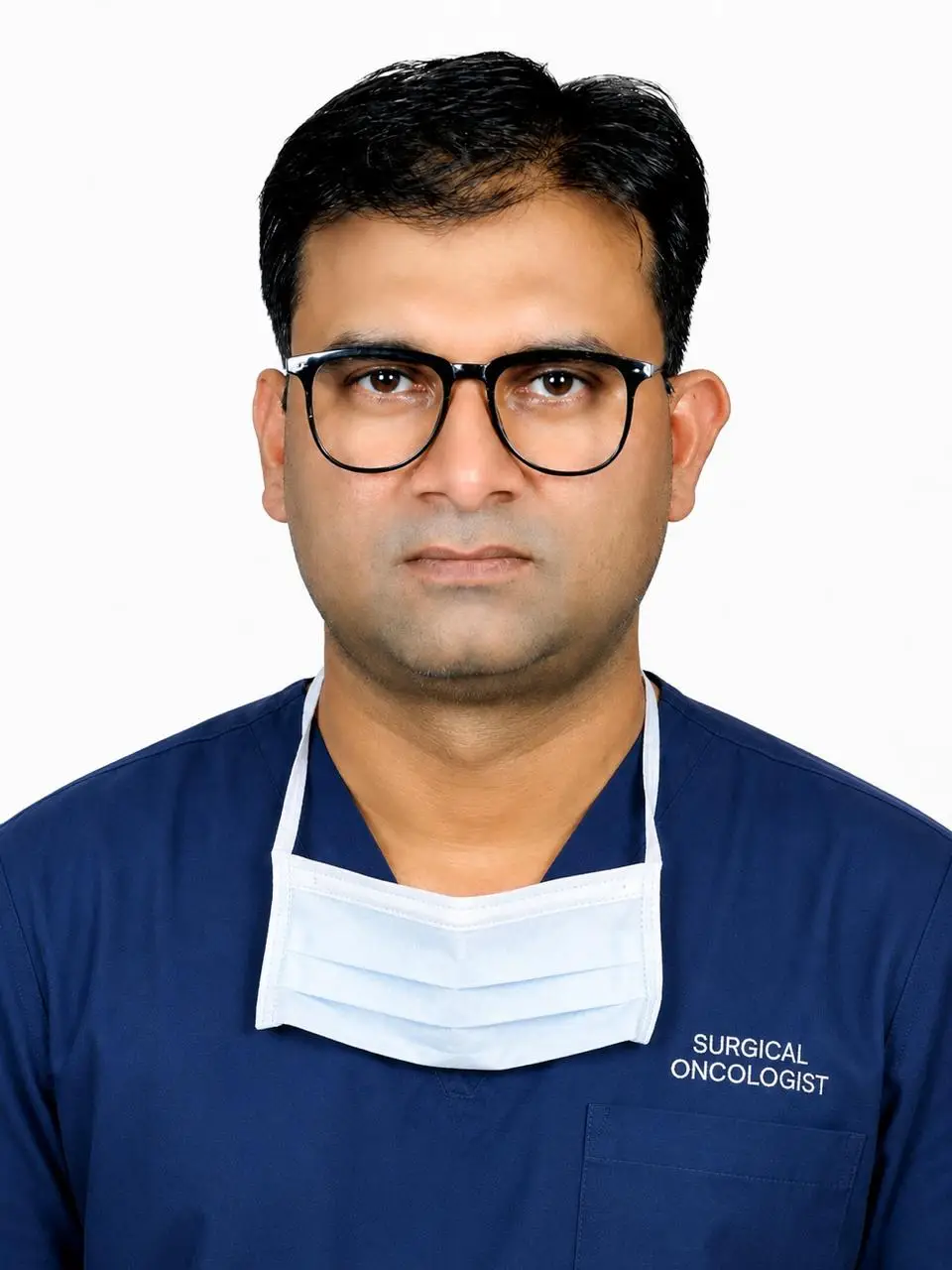
Trained in Bikaner at Sardar Patel Medical College, and in surgical oncology at Fortis Hospital, Shalimar Bagh, New Delhi. In medical service since 2012. Today he is Assistant Professor of Surgery and a consultant surgical oncologist at the regional cancer institute, PBM Hospital, Bikaner.
02Areas of care
The cancers Dr. Devi Singh treats surgically, explained in plain words — the warning signs, the tests, and how surgery fits into the plan.
All areas of careCancers of the mouth, tongue, voice box and other parts of the head and neck. Here you can read about the warning signs, the tests, and how surgery fits into treatment.
Cancers of the food pipe (oesophagus), stomach and other parts of the gut, and the part surgery plays alongside other treatment.
Cancers of the liver, gallbladder, pancreas and bile ducts, and how surgery for them is planned. Doctors call this group HPB (hepatopancreatobiliary).
Cancers of the colon and rectum, how treatment is planned, and advanced keyhole (laparoscopic) bowel surgery where it is suitable.
The surgical side of breast cancer care, from a lump that needs checking to an operation planned together with other treatment.
Surgery for cancers of the womb, cervix, ovaries and other female reproductive organs, planned together with other treatment.
Surgery for cancers of the kidney, bladder and related organs of the urinary system, planned together with other specialists.
Thyroid lumps and cancers of the hormone-producing glands. Here you can read how they are tested, and when surgery is advised.
Soft-tissue sarcomas and tumours deep in the back of the belly (retroperitoneum), and the part surgery plays in their care.
Cancers that spread to the lining of the belly (peritoneum). For some patients, a long operation called CRS may be done with heated chemotherapy washed inside the belly, called HIPEC.
03How care is planned
Six steps, in order. At each one you know what is happening, why, and what comes next.
Your first visitConsultation
The first visit is for listening and examining. Bring every report you have, and a family member if you can.
Diagnosis
Where needed, a biopsy and scans are advised so that the plan is based on test results. Tests already done are not repeated without reason.
Planning
Cancer care often needs more than one specialist. Where your case needs it, pathology, radiology, medical oncology and radiotherapy colleagues are involved in the plan.
Counselling
The plan, its benefits and its risks are explained to you and your family. You can ask as many questions as you need before you decide.
Surgery
When surgery is the right step, it is planned carefully. Laparoscopic, minimally invasive or robotic methods are used where they suit the cancer and the patient.
Follow-up
The final biopsy report guides any further treatment. Regular follow-up visits continue after you go home.

Where suitable
What laparoscopic (keyhole) cancer surgery is, when it may be suitable, and when open surgery is the safer choice.
Read more
Where indicated
What robotic cancer surgery means, and when the surgeon may consider a robot-assisted approach.
Read moreEvidence-based treatment, careful surgical planning, multidisciplinary cancer care, clear patient counselling and compassionate treatment.
Decisions follow established cancer-care guidance and the facts of your own case — the biopsy, the scans and your overall health.
Every operation is planned before it begins: what needs to be removed, how, and how to keep recovery as smooth as possible.
Surgery is one part of cancer care. Pathology, radiology, medical oncology and radiotherapy colleagues are involved where your case needs them.
You and your family are told what is known, what is not yet known, and what the options are — in plain words, with time for questions.
05Your first visit
The first consultation is far more useful with your papers in hand. If something is missing, come anyway — you will be told what else is needed.

PBM HospitalMedical College Circle
He trained at Sardar Patel Medical College, Bikaner, and practises at PBM Hospital and at his clinic near Medical College Circle. Families from Bikaner and nearby towns can begin cancer care here.
06Timings & places
Timings change with the season. Please call before travelling from outside Bikaner.
Clinic OPD
Timings can change on operating days and holidays — please call to confirm before you travel.
Private clinic
Institution
आचार्य तुलसी क्षेत्रीय कैंसर उपचार अनुसंधान संस्थान
PBM Hospital campusBikaner, RajasthanThe doctor listens to your story, asks about symptoms and past illnesses, examines you and studies your reports. He then explains what is known, what else may be needed, and the next steps. You can bring questions written down.
Bring the biopsy report (a biopsy is a small sample of tissue examined under a microscope), biopsy slides and blocks if you have them, and all CT, MRI or PET reports with the films or CDs. Also bring blood test reports, discharge summaries from earlier hospitals, and a list of the medicines you take now.
Yes. Asking for a second opinion is a normal and sensible step. Bring all your records so that your case can be reviewed fully. See the second opinion page for how this works.
No. Some people need surgery, some need chemotherapy or radiotherapy, and some need a combination. The plan is made after examination, tests and a team discussion.
Keyhole (laparoscopic) surgery uses small cuts and a camera, while open surgery uses a larger cut. Keyhole or robotic methods are used only where suitable. If open surgery is safer for your cancer, that is advised.